Understanding species, treatments, and detailing for durable outdoor performance.
Continuing our conversation exploring materials in the landscape, we’re focusing on wood—why we would use it, how we select soft or hard woods, what environmental conditions shape those choices, and the range of products available.
Why We Use Wood
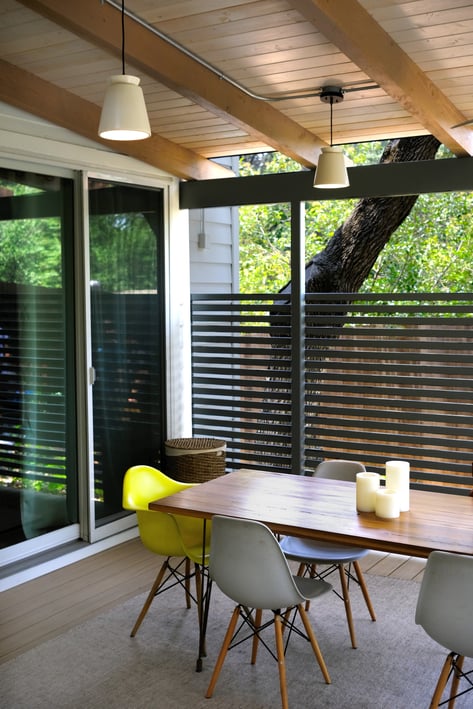
We like wood for both experiential and practical reasons. Experientially, it brings lightness, warmth, and a perceived softness to a space. Practically, skilled labor is widely available, it’s lighter to handle than steel or stone, and construction generally has a lower impact on the site.
How Site Conditions Shape Wood Selection
Wood choice depends on whether it’s used structurally (like framing) or as cladding (like privacy screens), and whether the application is indoors or outdoors. In landscapes, the main concerns are moisture exposure, drying ability, and weathering. Rot can be mitigated through thoughtful detailing so water doesn’t get trapped, using flashing and drainage where needed.
Softwoods Vs. Hardwoods
Soft woods grow quickly and are relatively inexpensive and easy to work with, though less resilient outdoors. Pine, Douglas fir, and cedar are common examples. They typically need paint, stain, or sealant to slow visual aging. Weathering doesn’t always indicate failure, but not everyone appreciates the silvered patina, and some materials like stone, steel, or concrete tend to weather more gracefully.
Hardwoods grow more slowly, giving them a tighter grain and higher density. This makes them more resilient for exterior use and often more aesthetically appealing, though heavier and more challenging to work with.
Treated Woods and Modified Woods
Softwoods can be made more durable through treatment. “Pressure-treated lumber” is a catchall for lumber infused with liquid preservatives, usually copper-based, forced deep into the wood in a pressurized chamber. This significantly improves rot resistance and is common for concealed structural components, though less suitable for seating or high-contact elements.
Thermally modified woods, such as Accoya and Thermory, undergo a heat-and-pressure process that changes the wood at a cellular level. This increases stability, predictability, and overall resilience, making them excellent for cladding and other non-structural elements.
Structural vs. Non-Structural Considerations
For structural applications, avoiding rot is critical, because failures can be dangerous. Treated woods are often preferred unless the structure is fully exposed and carefully detailed. Stability also matters: wood can twist, cup, or bow as it dries, and good carpentry anticipates this—like installing deck boards “bark up.”
Wood is abundant, renewable, and used widely in the U.S. Its performance outdoors depends on thoughtful selection and detailing, but when used well, it brings a warmth few materials can match. Next, we'll focus on using stone in the landscape.


 Angelique Robb

 Press Release : Oct 17, 2025, 9:24:38 AM