

 Angelique Robb
1 min read
Kitchen gardens are having a moment—but according to Katie Oglesby, owner of Kitchen Garden Design House, most people are still underestimating what they can be. “They see a garden and think, ‘That looks like so much work,’” Oglesby explains. “So the question became: How do we make it easier, and how do we make it beautiful enough that people actually want it in their landscape?”
Through her work, Oglesby is redefining the kitchen garden as more than a tucked-away utility space. It’s a designed experience. One that sits at the intersection of lifestyle, aesthetics, and long-term maintenance strategy. Two recent projects illustrate just how versatile and complex these spaces can be.
Project One: Designing Within Constraints
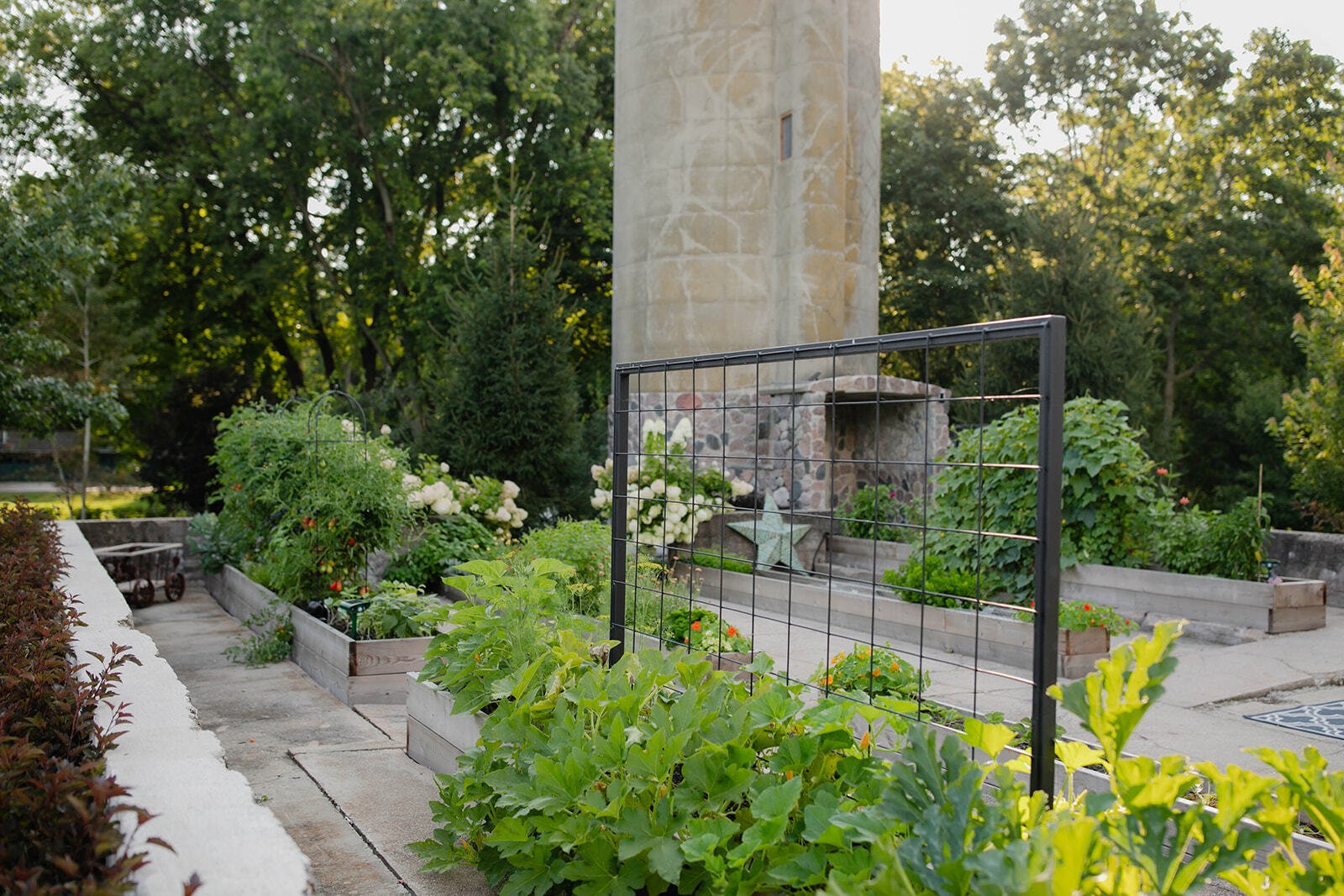
The first project began with a strong vision and a challenging site. A client approached Oglesby with a desire to transform an old barn foundation and silo structure into a productive kitchen garden. The space included existing concrete troughs once used for livestock, along with aged foundation walls that framed the site. “The goal was to really honor the space,” Oglesby says. “But as we got into the project, we had to adjust expectations based on what could actually grow there.”
The biggest limitation? Depth. Some of the existing troughs were only four to six inches deep. Far too shallow for most edible crops. Rather than removing them, Oglesby leaned into the constraint. We started building raised beds within the troughs,” she explains. “We wanted to keep that old patina and make it look like it had always been there.” The solution required precision and flexibility. Nothing in the space was square. Drainage was uncertain. And the visual balance between old and new had to be carefully managed. But the result is a seamless blend of heritage and functionality, a garden that feels both preserved and purposeful.
Microclimates, Materials, and Maintenance
Beyond aesthetics, the project highlights a critical reality: kitchen gardens are highly responsive systems. “This garden creates its own microclimate,” Oglesby notes. “The concrete holds heat, so it can get really warm in there.” That heat retention accelerated plant growth, but also increased irrigation demands. Combined with limited soil depth, it created a delicate balance between overwatering and drought stress.
“People think more water is better,” she says. “But especially early in the season, overwatering can stagnate plants, and in a northern climate, they may not recover.” To manage this, Oglesby’s team integrates ongoing maintenance into their process, including monitoring irrigation, adjusting schedules, and troubleshooting issues throughout the season. It’s a clear example of SYNKD’s core philosophy in action: design, build, and maintain are not separate phases; they’re deeply interconnected.
Project Two: A Front Yard Statement
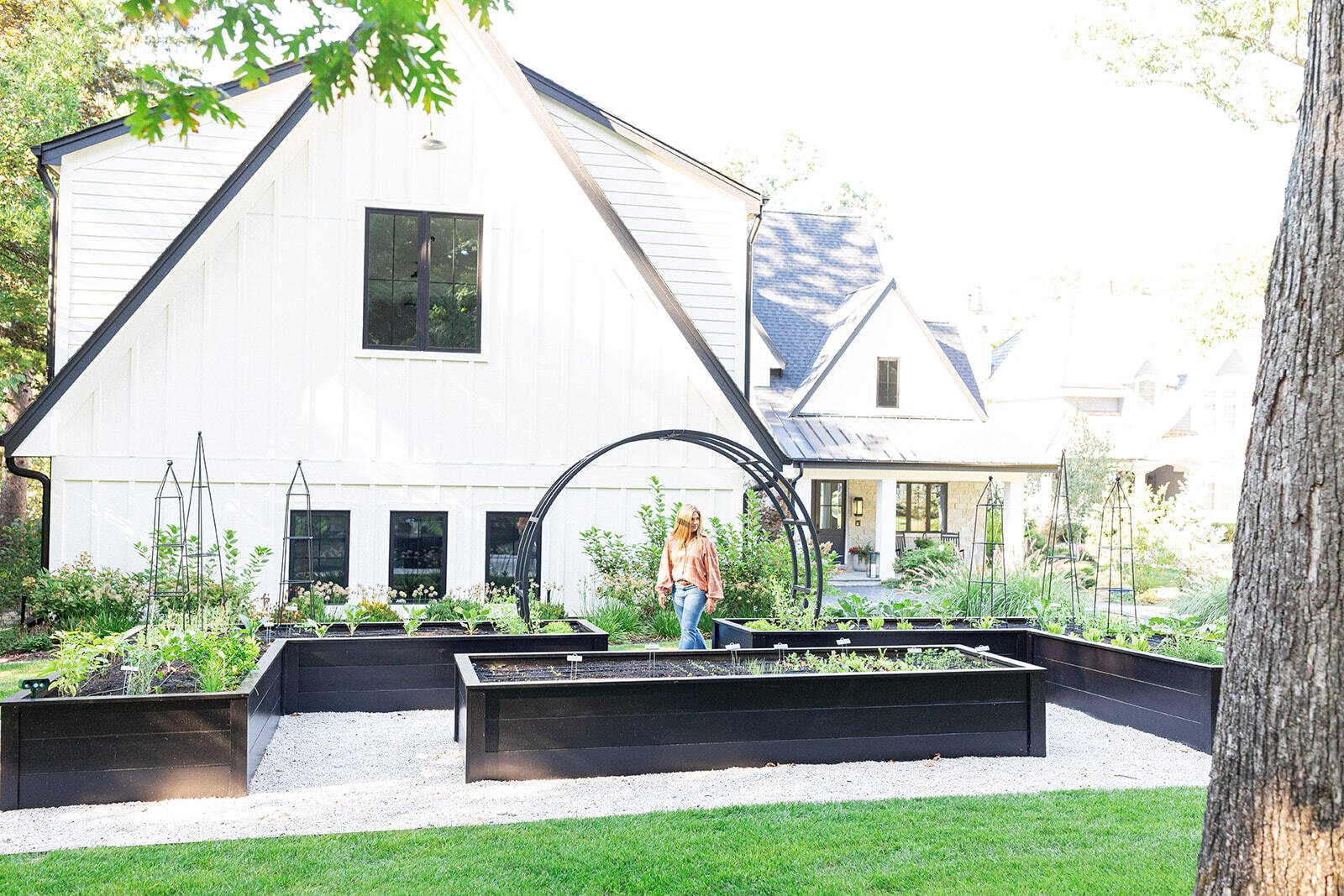
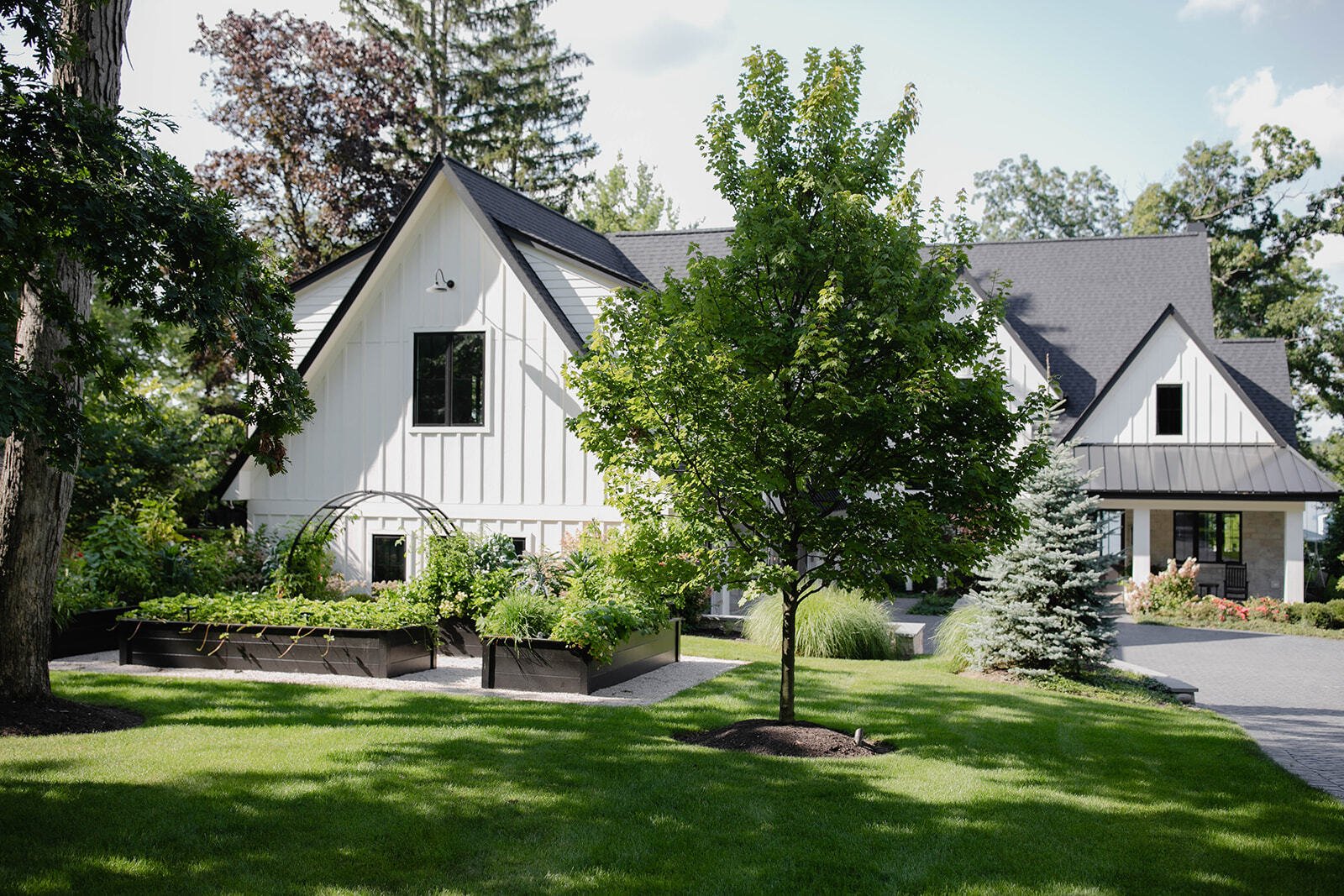
If the silo garden was about working within constraints, the second project was about rethinking expectations entirely. Faced with a heavily shaded backyard and lakefront views that couldn’t be obstructed, Oglesby made a bold decision: move the kitchen garden to the front yard. “I thought, how am I going to sell this front yard garden so it looks like it was meant to be there and not just dropped in?”
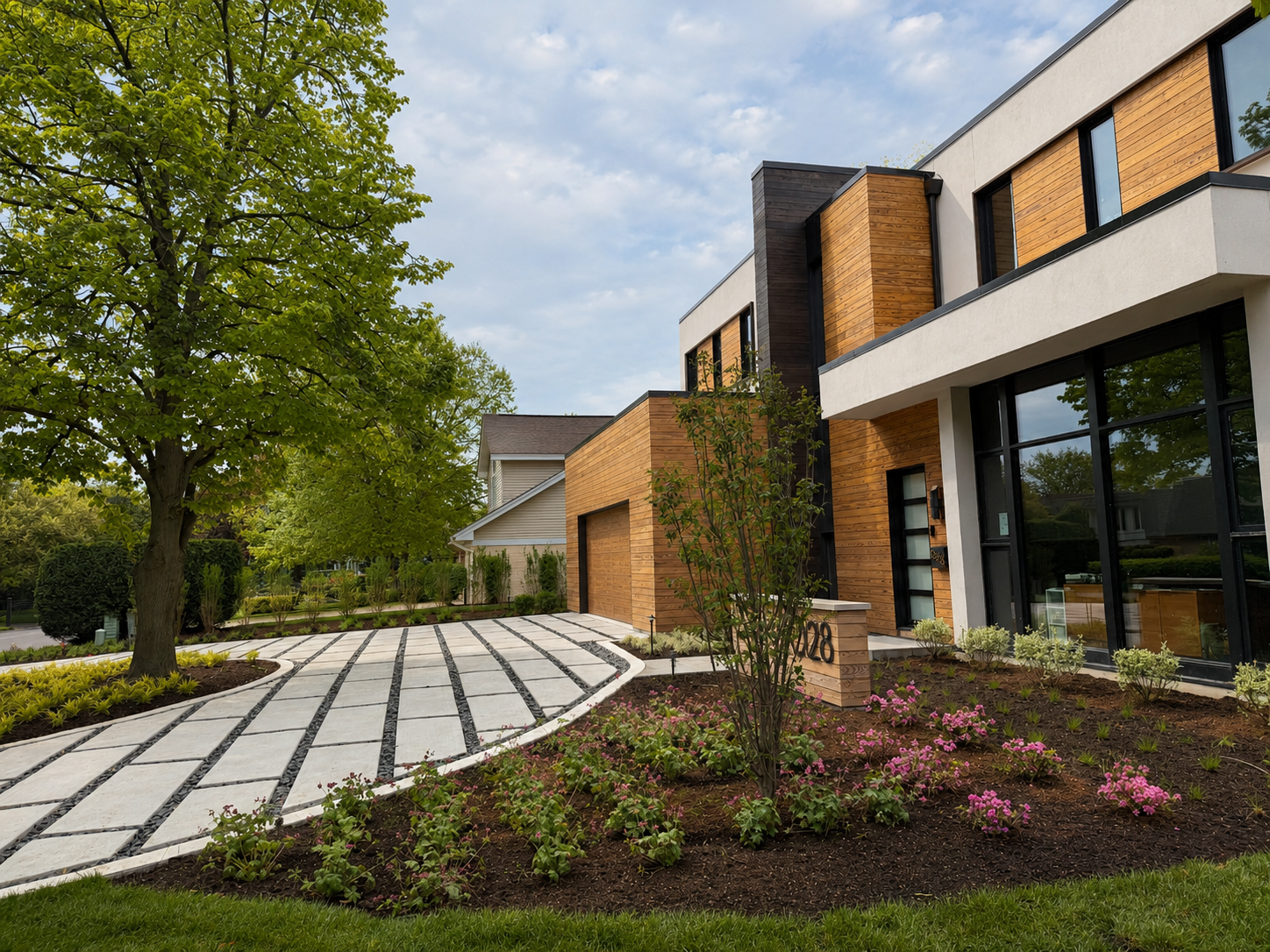
The answer came from the architecture itself. Drawing inspiration from the home’s herringbone driveway and strong geometric lines, Oglesby designed a striking black-and-white garden that mirrors the house. “I wanted the magnitude to match the scale of the home,” she explains. “Not look dinky, but intentional.”
Custom trellises, bold material choices, and precise layout decisions transformed the space into a cohesive extension of the property. The result challenges a long-standing norm: that edible gardens belong hidden in the backyard. “If it’s done right, why not have it in the front yard?” Oglesby says.
The Hidden Power of Setup
Across both projects, one theme stands out: success starts long before planting. “The setup is key,” Oglesby emphasizes. “When we control the soil and the environment, we’re setting the client up for success.” Her approach prioritizes raised beds not just for aesthetics, but for performance. Compared to in-ground gardening, raised systems reduce weed pressure, improve drainage, and significantly cut maintenance time. “My in-ground garden takes 80 percent of my time,” she says. “My raised beds take 20 percent.”
Even details like installing beds on stone rather than soil are intentional—extending material longevity, improving usability after rain, and creating a cleaner, more functional workspace. These decisions may seem small, but they directly impact whether a client sticks with gardening or abandons it.
Designing for Real Life
Perhaps the most compelling insight from Oglesby’s work is that kitchen gardens are not static. They evolve with the client. “The beauty of a kitchen garden is it can shift with the season of life,” she explains. Busy summer? Scale back to low-maintenance crops or pollinators. More time in the fall? Transition to a salad garden. Changing health goals? Adjust what’s planted.
This adaptability is supported by Oglesby’s ongoing coaching and maintenance programs, which help clients stay engaged without becoming overwhelmed. “It’s about giving them strategy and support,” she says. “That’s what makes the difference in their success.”
Expanding the Definition of “Edible”
In the second project, that evolution extended beyond the kitchen garden itself. As the client’s confidence grew, so did the scope: blueberries replaced ornamental shrubs, a small orchard was added, and even a mushroom garden was introduced in a shaded woodland area. “We ask, what can we grow in this space?” Oglesby says. “It’s about adapting to what the property gives you.” This layered approach transforms landscapes into productive ecosystems, blending beauty, function, and sustainability.
A New Standard for Outdoor Living
At its core, Oglesby’s work reflects a broader shift in the industry. Clients aren’t just looking for landscapes; they’re looking for experiences. They want spaces that nourish their families, support their health, and connect them to their environment. And increasingly, they expect those spaces to be both beautiful and manageable. Kitchen gardens, when done right, deliver on all fronts. But as these projects show, success doesn’t come from planting alone. It comes from thoughtful design, precise execution, and ongoing care—fully SYNKD from start to finish.
Katie Oglesby
Creating Gardens that Nourish You + Feed Your Soul
Garden designer
Certified health coach
262-989-9550 | katieoglesby.com | Instagram
1 min read
Beyond the Boundary: How International Design Is Redefining Outdoor Living in Florida's Luxury Homes
Florida's luxury residential market has become a testing ground for how outdoor environments are designed, built, and experienced. Across the state,...
1 min read
Designing the experience: Elevating a coastal landscape through light, sound and strategy
 Angelique Robb : Jul 13, 2026, 4:27:24 PM
A Rehoboth Bay project that proves quality isn’t an upgrade—it’s the standard