

 Angelique Robb
1 min read
Understanding Trees - Post-Planting Care
Post-planting care is essential in the quality of life, longevity, and aesthetics of any urban tree. The first five years after planting will...
.jpg?width=6000&height=4000&name=A7304206%20copy%20(1).jpg)
In an industry built on removal, Basil Camu made a decision that most would consider unthinkable. He stopped cutting down trees. At the time, removals accounted for nearly half of his company’s revenue in the order of $2 million. Walking away from it meant dismantling a core profit center, retraining his team, and risking the future of Leaf & Limb altogether.
But for Camu, the decision wasn’t just strategic; it was necessary. “We took a step back and asked what our overall contribution was, and it didn’t look good,” Camu says.
What followed wasn’t just a business pivot. It was a full reinvention—one that challenges the foundation of arboriculture and offers a roadmap for a more sustainable, and arguably more resilient, future. Camu’s turning point didn’t come from a single job site. After reading The Responsible Company by Yvon Chouinard, he questioned the role his business played.
At the time, removals made up roughly 60 percent of Leaf & Limb’s work. At the same time, the day-to-day reality of the job was becoming harder to ignore. Picture this: a mature white oak, healthy and thriving, slated for removal so a homeowner can install turfgrass. For many, it’s routine. “It became really hard for me to stomach,” Camu explains. He realized that the tree care industry wasn’t aligned with the very thing it claimed to protect.
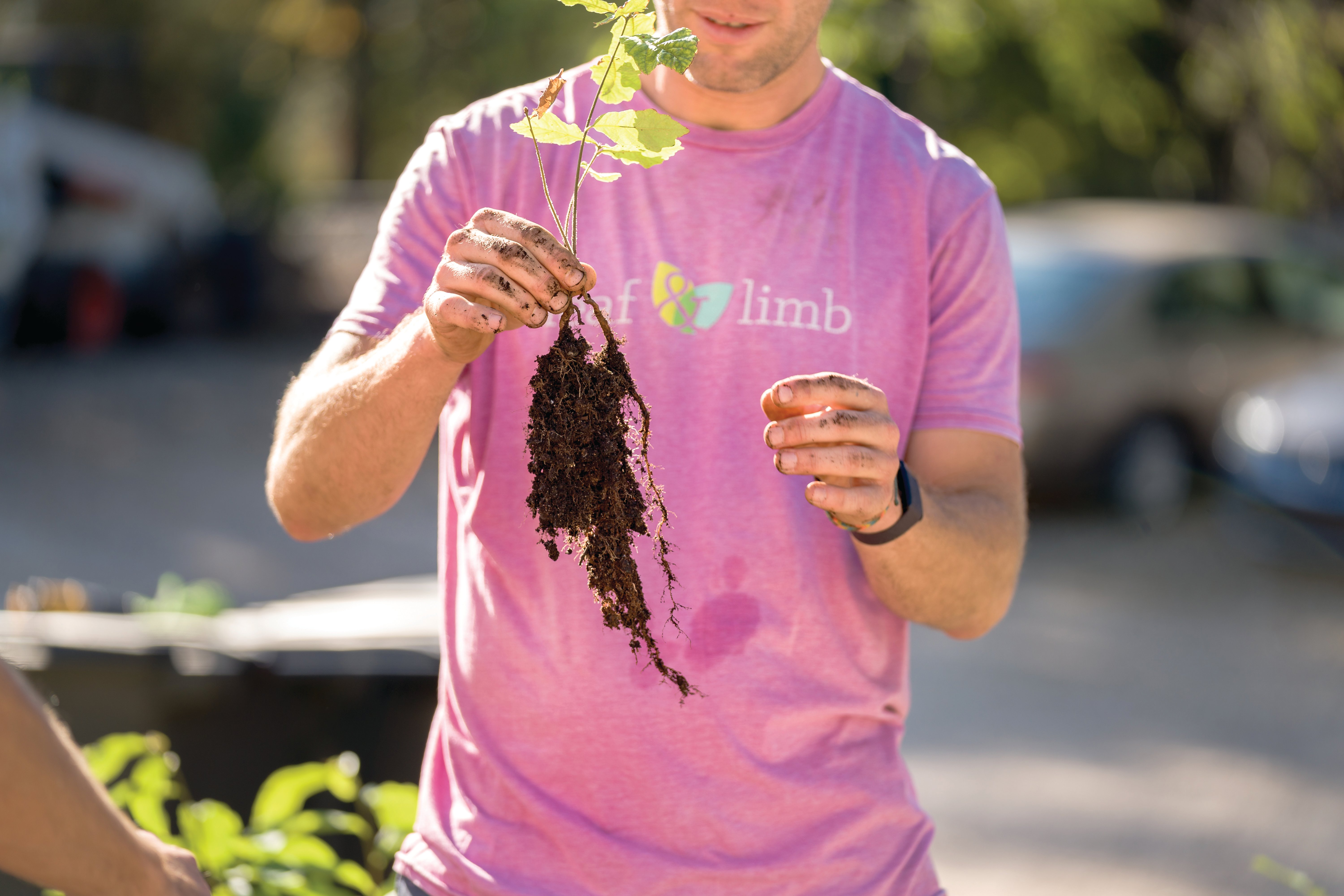
Like many leaders, Camu didn’t immediately take the radical route. From 2016 to 2019, Leaf & Limb attempted to shift away from removals through education and sales—encouraging clients to preserve trees instead of cutting them down. It didn’t work due to quite a few challenges:
“You could make a $3,000 removal sale easily or spend a lot more time explaining why soil matters and maybe make $1,000,” Camu says. Even worse, the approach created friction. Some clients felt judged. Others simply hired a different company.
After three years, the company had only reduced removals from 60 percent to 40 percent of revenue. That’s when Camu realized that he had to take the radical route and stop removals completely. In 2020, Leaf & Limb made the call. They eliminated tree removal as a service. Not reduced. Not repositioned. Removed. The impact was immediate: $2 million in annual revenue disappeared overnight.
Internally, the shift required alignment. Camu didn’t dictate the decision. He built buy-in across the team. Still, not everyone stayed. The company downsized by roughly 10 employees. “It was emotional,” he admits. And then, just as the new model launched, COVID hit.
What could have been catastrophic instead revealed something powerful. The decision polarized the market. Some clients were upset. Others became deeply loyal. Camu says, “We traded a large group of loyal clients for a smaller group of exuberant fans, and that’s worth a lot.”
Those “fans” became advocates sharing the company’s mission, referring new clients, and amplifying the brand in ways traditional marketing couldn’t. Camu credits this shift to a core business principle: There’s no room for vanilla in business, you have to stand for something.
By removing the option of removals, Leaf & Limb became unmistakably clear in its identity. And in doing so, it created demand. Eliminating a major revenue stream is only half the story. Leaf & Limb rebuilt around services that aligned with their mission and offered real value to clients.
A highly specialized service that strengthens trees and extends their lifespan. “Structural pruning actually makes a tree stronger,” Camu explains. It’s technical, high-value, and underutilized, making it a strong foundation for growth.
By focusing on soil biology and long-term tree health, the company shifted from reactive work to preventative care.
Leaf & Limb expanded beyond trees, introducing meadow conversions and ecological restoration. They developed a whole new category for the business. “We care for trees and land in ways that help heal Earth and leave every site healthier,” says Camu.
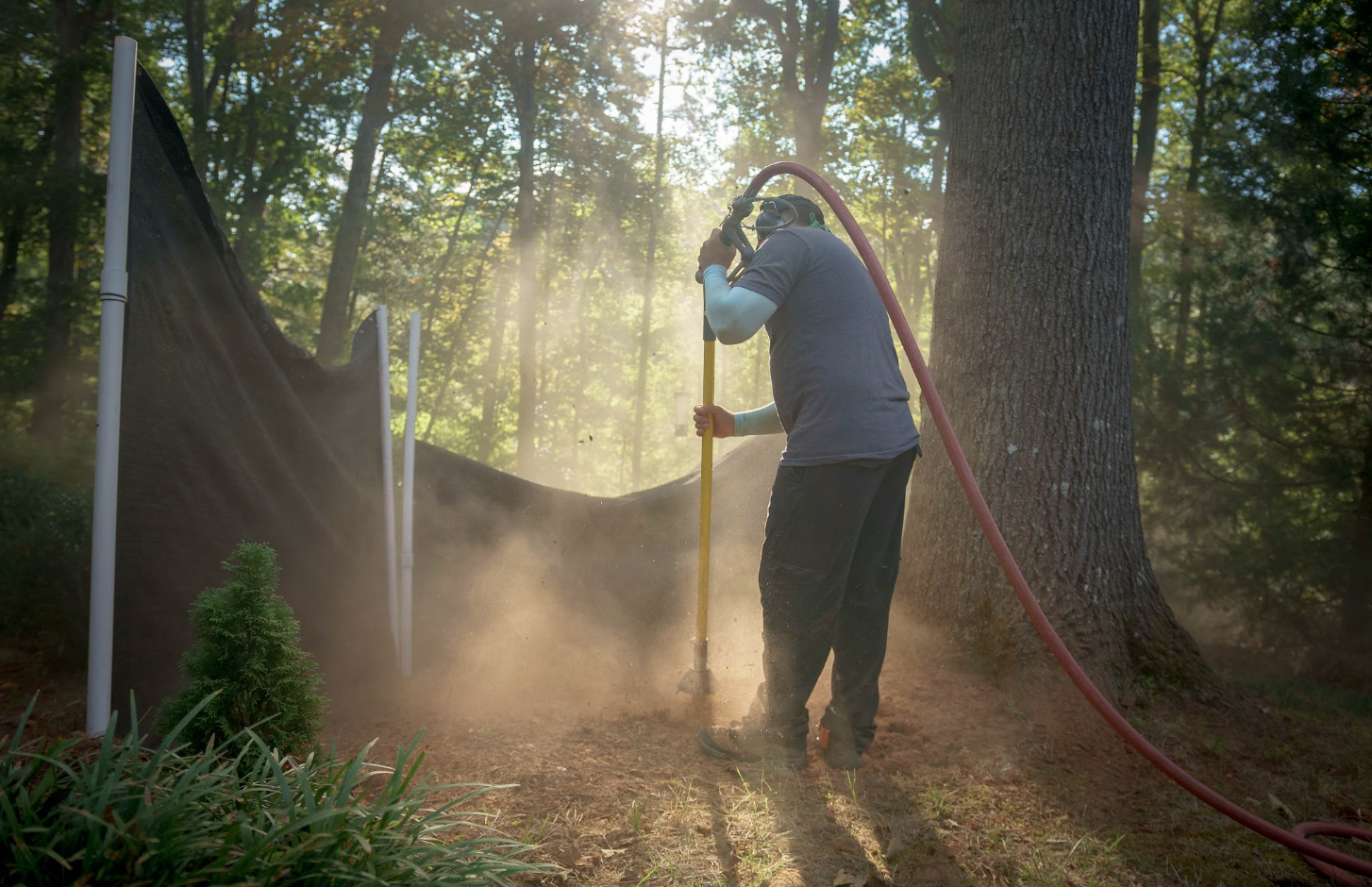
One of the most overlooked outcomes of the shift was operational efficiency. Removing tree removals eliminated:
Without that “monkey on the back,” as Camu describes it, the company could rethink everything. Teams became cross-trained across all services, trucks were redesigned to handle multiple functions, and fewer crews could deliver more value per visit. The result wasn’t just philosophical alignment; it was a better business. Perhaps the most surprising outcome came from competitors.
Without removals, Leaf & Limb was no longer competing on the industry’s most common service. Instead, other tree companies began referring work to them. “Many of the tree services we used to compete with now send work to us,” Camu says. It’s a powerful example of what happens when a company defines its niche clearly enough. It reshapes its position in the market.
Camu doesn’t shy away from a broader critique of the tree care industry. “We call ourselves the tree care industry, but really, we’re the tree removal industry.” It’s a bold statement, but one that resonates across the green industry. From excessive removals to soil degradation to chemical reliance, many practices prioritize short-term outcomes over long-term ecosystem health. Camu believes the industry has an opportunity and responsibility to evolve. “I think we can stand for something good,” he says.
Leaf & Limb didn’t just survive the transition. The company surpassed its previous revenue levels and expanded its team to 65 employees. Most notably, it solved one of the industry’s biggest challenges: hiring. “Nobody wants to cut down trees all day,” Camu says. “People do want to do meaningful work.” By aligning purpose with practice, the company attracted talent. Sustainability, it turns out, isn’t just good for the environment—it’s good for business.
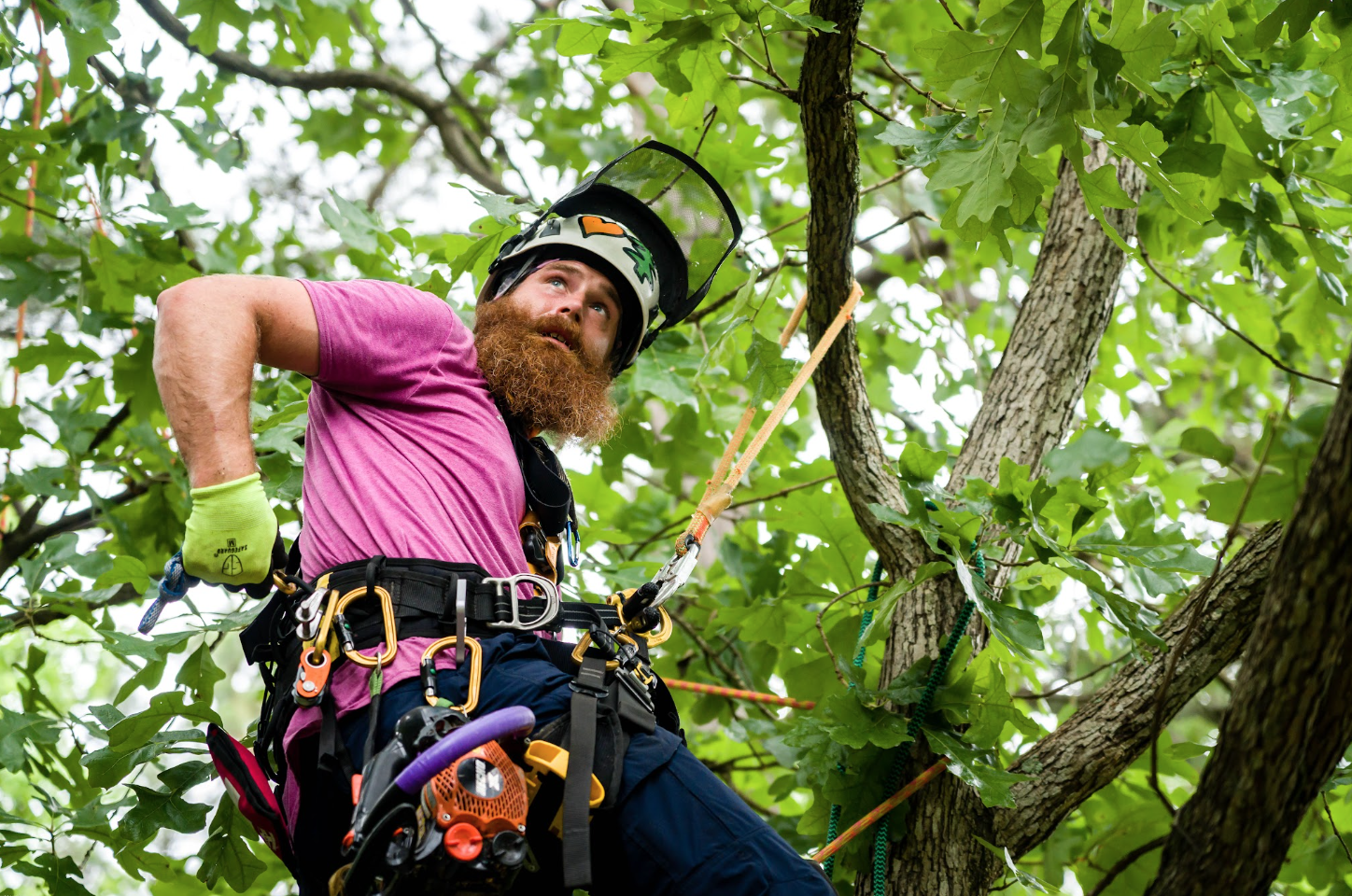
Camu is clear: this path isn’t easy. “It’s a bit of a trapeze moment,” he says. “You have to let go before you grab the next one.” But for those willing to explore it, the steps are becoming clearer:
Most importantly, Camu emphasizes progress over perfection. “You don’t have to flip everything overnight,” he says. “A step in the right direction is still a step.” Camu’s ambition extends beyond Leaf & Limb. He envisions an entirely new segment within the industry, one centered on regeneration rather than removal. And he’s actively sharing the blueprint. “This is a playbook for a new business model,” he says.
For SYNKD’s audience—designers, builders, and maintenance professionals—the implications are significant. Because this isn’t just about arboriculture. It’s about rethinking how every part of the landscape industry interacts with the environment and with each other.
Camu points out that suburban landscapes make up a small percentage of land, but they hold an outsized influence. “They’re where people live, vote, and spend money,” he says. Change the landscape there, and you begin to shift behavior at scale. That’s the real opportunity to reshape expectations. Not just to adapt business models, but to lead the industry forward.
1 min read
Post-planting care is essential in the quality of life, longevity, and aesthetics of any urban tree. The first five years after planting will...
1 min read
 Press Release : Mar 16, 2023 6:15:36 PM
Bartlett Tree Experts Expands in Western Massachusetts and in Maryland with Acquisition of The Haupt Tree Company and Stansbury Tree Service,...

1 min read
 Laura Lee : Jun 23, 2023 1:30:07 PM
Environmental Design is in the Business of Saving Trees—By Moving & Replanting Them