

 Angelique Robb
Becoming Climate Positive
 SYNKD Writer : Jul 4, 2023 10:57:15 AM
Landscape Architect Pamela Conrad is Revolutionizing the Way Landscapes are Designed with the Launch of an App
For over four decades, Wimberg Landscaping has served Cincinnati, Ohio’s, residential market with a full suite of design, build, and maintenance services. But it’s not longevity alone that makes Wimberg stand out, it’s how they’re evolving the industry by embracing landscapes that are as functional and beautiful as they are ecologically sound.
At the heart of this transformation is Peter Wimberg, the company’s founder and driving force. What began as a lawn-mowing route at age 10 has grown into a 65-person operation with 40 trucks, serving hundreds of clients across greater Cincinnati. And, now, the company is boldly shifting the way it designs—not just for people, but for pollinators, biodiversity, and the future of the planet.
While Wimberg studied finance in college, he never left the landscape world. His passion for the outdoors, cultivated from a young age, always pulled him back to the soil. That grounding in nature—and his years hiking through the Great Smoky Mountains—deeply inform how he sees landscape design today: not as a static, ornamental display, but as a living, evolving system that works in harmony with the land.
“I just always liked that look, wild, natural, full of life,” he reflects. “The woods, the meadows, the texture, that’s what I wanted in my own yard, long before anyone was really talking about pollinator gardens.”
About five years ago, Wimberg Landscaping began formally embracing naturalistic design. The shift started with a local park garden through an “adopt-a-plot” program. When a fellow board member and former editor of Horticulture magazine suggested rethinking the space, Wimberg said yes and watched the transformation unfold.
The inspiration? The iconic work of Piet Oudolf, known for designing the New York High Line and Chicago’s Lurie Garden. Together, they tore out the boxwoods and annuals and installed a meadow-like garden full of native plants, seasonal interest, and biodiversity. The public responded with awe.
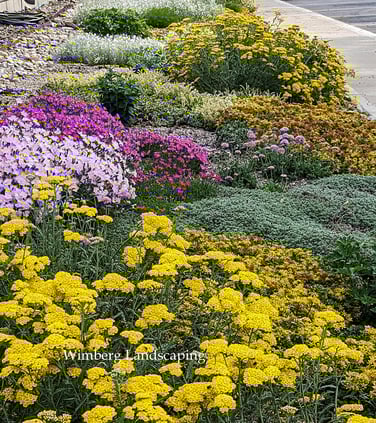
When Wimberg moved offices in 2020 to a five-acre property outside Cincinnati, its founder saw an opportunity to turn theory into practice. Where there was once turf, there is now a thriving garden—nearly an acre filled with pollinator plants, winding paths, and habitat for everything from goldfinches and monarchs to praying mantises and turtles.
“There’s no lawn out front anymore,” he says. “And we’re not just maintaining it, we’re learning from it. Our staff, our clients, the public, everyone who visits starts to see that there’s another way.”
The gardens have become a destination in their own right. They’ve been featured on local tours and won awards. College classes and garden clubs now visit for tours and lectures, and Wimberg even speaks at the Cincinnati Zoo & Botanical Garden’s Native Plant Symposium, one of the most respected gatherings on the topic nationwide.
While Wimberg is clear that traditional landscapes still have a place, he believes the industry is overdue for more creativity and courage.
“I counted 500 boxwoods in front yards during a walk through my neighborhood,” he recalls. “Boxwoods aren’t cheap, and they’re under threat from box tree moths. We need to offer clients more interesting, more sustainable options.”
In 2023, his team sent letters to 300 homeowners on two of Cincinnati’s most visible streets, offering to transform their front lawns into pollinator gardens. The response? Over 25 replies resulting in more than a dozen new front-yard meadows.
These weren’t tucked-away backyard experiments. They were bold, public examples. And they’re already inspiring others. “Some of them will be on next year’s local garden tour,” Wimberg says. “People walk by and ask questions. Kids get involved. It’s spreading.”
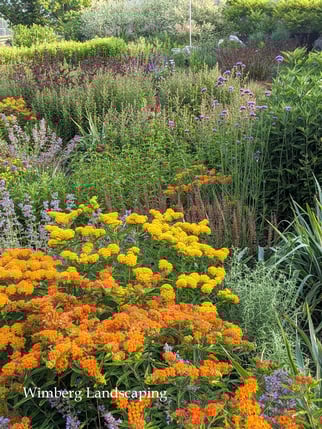
Wimberg Landscaping doesn’t just install these gardens—they maintain them, too. That creates new challenges and opportunities for their crews. Native-focused gardens require a different kind of knowledge. Maintenance isn’t just about neatness; it’s about knowing which seedlings to pull, which to let grow, and how to read a landscape in flux.
“We tell our team, when in doubt, don’t cut anything,” Wimberg laughs. “It’s a mindset shift. But we’re training crews who are now proud to be plant experts and that builds value for our business.”
Wimberg has created a pollinator-specific newsletter, built a classroom on site, and invested in public outreach. “It’s a different conversation now. People don’t just want pretty, they want purpose,” he explains.
He knows this movement isn’t for everyone—yet. But the momentum is building.
Clients are more open to ditching turf in underused front yards. His office gardens are proof that wildness can be elegant. And he is helping lead the charge toward a new aesthetic, one that’s ecologically rich, seasonally expressive, and deeply rooted in place.
“It’s not about being anti-lawn,” he says. “Lawns have a role. But we’re showing people they have options. And once they see it, really see the life, the movement, the texture—they’re in.”
Wimberg Landscaping’s evolution isn't about abandoning its legacy. It’s about expanding its vision. Today, the company balances traditional residential services with forward-thinking ecological design. And it’s found a growing audience ready to reimagine their yards, their neighborhoods, and their relationship with nature.
“We’ve just scratched the surface,” Wimberg says. “This isn’t a trend. It’s the future.”
SYNKD Writer : Jul 4, 2023 10:57:15 AM
Landscape Architect Pamela Conrad is Revolutionizing the Way Landscapes are Designed with the Launch of an App
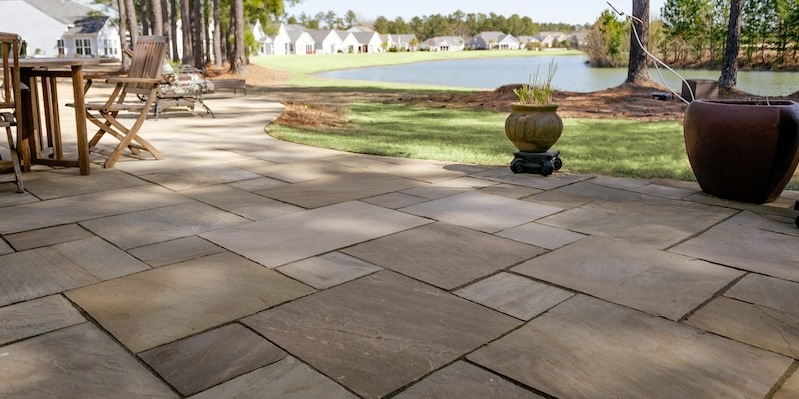
Available at select SiteOne Stone Centers nationwide, the Solstice Stone Collections contain several varieties of hand-picked natural stone products...

SYNKD Writer : Aug 11, 2024 3:43:54 PM
The Ultimate Outdoor Living Experience at Gulf Front Estate Luxury living has transcended the confines of indoor spaces, flourishing in the great...